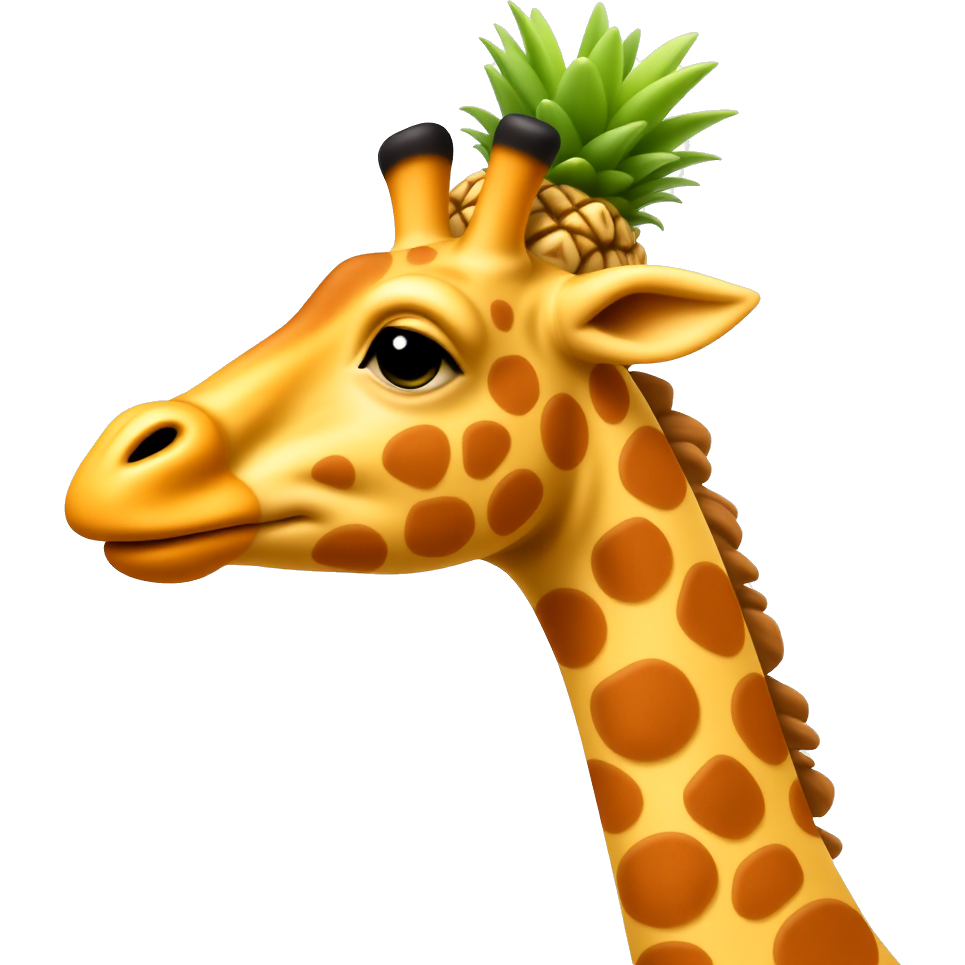

🍕🌮 Giraffood: A towering giraffe made of a crispy pizza crust for its legs, taco shell neck, and a leafy lettuce mane. Its spots are colorful mini cupcakes, and its eyes are deviled eggs. Topped with a pineapple crown, this giraffood is a feast for the eyes! 🍍🦒
Don’t question my profile pick's profile picture

@randomemojimaker123

17 followers

30

🍕🌮 Giraffood: A towering giraffe made of a crispy pizza crust for its legs, taco shell neck, and a leafy lettuce mane. Its spots are colorful mini cupcakes, and its eyes are deviled eggs. Topped with a pineapple crown, this giraffood is a feast for the eyes! 🍍🦒

See More
🍕🌮 Giraffood: A towering giraffe made of a crispy pizza crust for its legs, taco shell neck, and a leafy lettuce mane. Its spots are colorful mini cupcakes, and its eyes are deviled eggs. Topped with a pineapple crown, this giraffood is a feast for the eyes! 🍍🦒
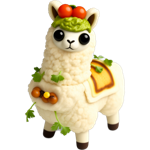
🍕🥑 Llama made of food: A fluffy llama crafted from layers of pizza dough with mozzarella fur, topped with guacamole and cherry tomato eyes. Its saddle is a delicate tortilla filled with beans and corn, adorned with cilantro sprigs as decorative fringes! 🌮🥕
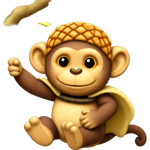
🍌🥜 Peanut butter banana monkey with a pineapple crown, wearing a taco shell cape. Its ears are made of crispy nacho chips, and its body features a playful mix of chocolate-covered pretzels and gummy worms, swinging from a veggie vine! 🥕🍏
Cheeseburger Pikachu: a plump Pikachu crafted from juicy burger patties, with melted cheddar for the ears, crispy lettuce for its cheeks, and a sunny-side-up egg for its face. Tomato slices create the legs, while crispy potato chips serve as its tail, topped with a sprinkle of sesame seeds!
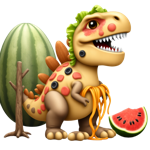
A dinosaur made entirely of scrumptious foods, wearing a colorful pizza slice hat, lettuce scales, spaghetti tail, and candy-coated spikes. Its eyes are made of olives and its teeth are crunchy carrot sticks, standing proudly next to a giant watermelon tree. 🍕🦖🥬🍉🍬
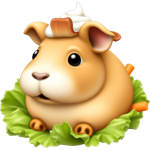
A delicious guinea pig made of a fluffy pancake body, chocolate chip eyes, and a whipped cream tuft on its head. Its ears are crispy bacon, and its feet are mini pretzels. It's snuggled in a bed of fresh lettuce with a side of carrot sticks for a cozy vibe! 🥞🐹🥗🥓
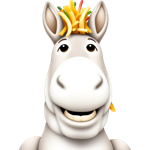
A big smiling donkey made entirely of food, with its body crafted from fluffy mashed potatoes, huge teeth formed from crispy fried onions, ears made of golden nachos, and a mane of colorful fruit strips, all set against a background of fresh greens and vibrant vegetable confetti.
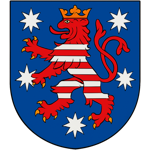
 ⸻  The coat of arms of the Free State of Thuringia consists of a single heraldic shield with a simple classical shape: the shield has a straight horizontal top edge, slightly curved sides that taper inward toward the bottom, and a rounded, pointed base typical of German heraldic shields.  The entire background of the shield is a uniform deep heraldic blue field (azure). This blue color fills the entire shield behind all other elements and contains no gradients, patterns, or textures.  Centered on the shield is a heraldic lion in a rampant posture, meaning the lion stands upright on its left hind leg, with the right hind leg lifted slightly, and both front legs raised forward and upward as if striking. The lion’s body is angled slightly toward the viewer’s left (heraldically to the dexter side of the shield, which appears to the viewer’s left). The lion’s head is turned in the same direction as the body, facing toward the heraldic dexter.  The lion’s entire base color is red (heraldic gules). Over this red base color run eight evenly spaced horizontal silver stripes (heraldic argent). These stripes extend across the entire width of the lion’s torso and limbs, following the shape of the body. The stripes begin near the upper chest and continue down across the abdomen and hindquarters. The pattern alternates red and silver so that the lion appears red with eight silver horizontal bars embedded across its body. The stripes are straight, parallel, and uniform in thickness.  The lion has distinct anatomical features typical of heraldic lions: 	•	The mane is stylized and flame-like, consisting of several curved locks that radiate around the head and neck. 	•	The mouth is open, revealing a visible red tongue. 	•	The tail is long and curves upward and backward, forming a pronounced arc above the lion’s back. 	•	The tip of the tail splits into two stylized tufts in some depictions or ends in a single tuft depending on the heraldic style, but it always curls upward.  The lion wears a golden crown placed on top of its head. The crown is a simple open royal crown with several pointed elements or fleur-like projections. The crown is colored gold (heraldic or) with subtle detailing indicating metal segments.  The lion’s claws and tongue are also colored gold, clearly contrasting with the red body. The claws on both the forepaws and hind paws are clearly visible and slightly elongated.  Surrounding the lion are eight silver stars (argent) placed directly on the blue field. Each star has eight points, meaning the star shape is composed of eight evenly spaced triangular rays radiating from a central point. The stars are flat, geometric, and identical in size.  The eight stars are distributed symmetrically across the shield around the lion: 	•	Three stars are positioned along the upper portion of the shield, above the lion’s head and raised forelegs. 	•	Two stars appear approximately midway along the left and right sides of the shield, roughly at the level of the lion’s torso. 	•	Three stars are positioned in the lower portion of the shield, beneath the lion’s hind legs and tail.  The stars are spaced so that they frame the lion without touching it, creating a balanced composition where the lion occupies the center while the stars evenly fill the surrounding blue space.  The design overall follows the conventions of European heraldry, especially those historically associated with the medieval Ludowingians, rulers of the Landgraviate of Thuringia. The red-and-silver striped lion originates from their heraldic symbol and remained the defining emblem of the region.  The modern arrangement of the lion with the eight silver eight-pointed stars was formally adopted after the re-establishment of the state following the German reunification in 1990, symbolizing the unity of the historical territories that form modern Thuringia within Germany.