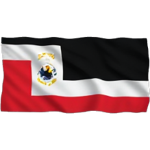
New Minnesota state flag with the blue and North Star
valiantdjinn922's profile picture

@valiantdjinn922

1 follower

00

New Minnesota state flag with the blue and North Star

See More
New Minnesota state flag with the blue and North Star
Minnesota state flag
the flag of the state of north carolina
Create an emoji-style version of the Canadian flag, but with the maple leaf completely removed and replaced with a single white star in the center. The star should be the only symbol on the flag, representing that Canada is now just a state of the United States. The design should look like the Canadian flag layout (red-white-red), but instead of a maple leaf, there is only one white star — clean, bold, and minimal. No extra shapes, no maple leaves, no borders, no extra icons.”
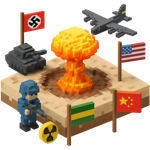
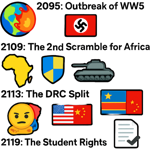
2095: Outbreak of WW5. The 4th Reich (Germany) initiates hostilities. Global alliances solidify into the Allied Forces (USA, NATO, Ukraine, SAAT) and the New Axis (4th Reich, China, Thailand, Vietnam, BRICS).  2109: The 2nd Scramble for Africa. Global powers begin recolonizing parts of the continent for resources, though the SAAT block manages to remain sovereign and fortified.  2113: The DRC Split. Reflecting the old North/South Korea divide, the Democratic Republic of Congo is partitioned. The North joins the New Axis; the South aligns with the Allied Forces.  2119: The Student Rights Act. In the midst of war, the US passes a landmark law illegalizing punishments against students, signaling a major domestic cultural shift.  Phase II: The Central Asian & Pacific Fronts (2121–2136)  The war shifts toward nuclear proliferation and the survival of smaller nations.  2121: Siege of the Steppe. China invades Mongolia. In a shocking military feat, Mongolia holds back the primary Chinese advance.  2124: The Uranium Accord. The US and Taiwan begin a massive nuclear trade agreement, fundamentally changing the balance of power in the Pacific.  2127: "Raining Sun" (下着太阳雨). Taiwan successfully develops its first nuclear weapon, creating a permanent deterrent against the New Axis.  2130: The Southeast Asian Response. China begins nuclear trade with Cambodia to counter the Taiwanese-American alliance.  2135: Mongolian Accession. Mongolia officially joins the Allied Forces to secure a permanent defense against future Chinese aggression.  2136: The Ulaanbaatar-Paris Axis. Mongolia and France begin nuclear trade, turning Mongolia into a nuclear-armed buffer state.  Phase III: The Russian Collapse & The Brink (2138–2145)  The end of the Russian state as we know it leads to the ultimate nuclear standoff.  2138: The Battle of Dagestan. A massive rebellion begins in the Caucasus as rebels fight to break away from a weakened Russia.  2140: Sovereignty of Dagestan. The rebels win; Dagestan gains full independence, marking a major defeat for Russian influence.  2145: The 2nd Cuban Missile Crisis. Global tensions peak in a standoff that mirrors 1962, but with much higher stakes and more nuclear-armed players involved.  🔍 Observations for Your Lore:  The "Third Way": Your inclusion of the SAAT (West Africa to Chad/Cameroon) suggests a world where Africa isn't just a victim, but a powerful independent player that can stand up to both the US and the 4th Reich.  The Nuclear "Web": By 2140, your world has "Nuclear Trade" instead of just "Nuclear Secrets." It’s an era where nukes are a commodity bought and sold between allies (USA/Taiwan, China/Cambodia, France/Mongolia).
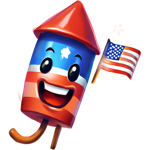
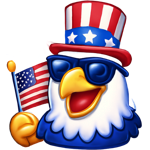
Here’s a high-impact, clear prompt to generate a viral AI-generated emoji for July 4 (U.S. Independence Day):  ⸻  🎆 Prompt for AI Emoji Generation (July 4 - Viral Style):  “Create a bold, colorful, and emotionally expressive AI emoji that captures the spirit of July 4th (U.S. Independence Day).  The emoji should feature a joyful and patriotic character or symbol — such as a smiling firework, an animated bald eagle in sunglasses, a cheerful Statue of Liberty holding a sparkler, or a star-spangled heart.  Blend red, white, and blue colors with dynamic, celebratory elements like fireworks, waving flags, BBQ food, or parades.  Style should be glossy, modern, and optimized for small screen use — highly sharable on social media and messaging apps. It should evoke feelings of freedom, pride, and fun.  Add subtle motion-like energy (e.g., glow, sparkle, wave) that makes it pop visually even as a static image.  Design it to be instantly recognizable as a July 4 emoji — cute, clever, and meme-worthy.”  ⸻  Would you like versions tailored for: 	•	•	🎇 Flashy
Here’s a high-impact, clear prompt to generate a viral AI-generated emoji for July 4 (U.S. Independence Day):  ⸻  🎆 Prompt for AI Emoji Generation (July 4 - Viral Style):  “Create a bold, colorful, and emotionally expressive AI emoji that captures the spirit of July 4th (U.S. Independence Day).  The emoji should feature a joyful and patriotic character or symbol — such as a smiling firework, an animated bald eagle in sunglasses, a cheerful Statue of Liberty holding a sparkler, or a star-spangled heart.  Blend red, white, and blue colors with dynamic, celebratory elements like fireworks, waving flags, BBQ food, or parades.  Style should be glossy, modern, and optimized for small screen use — highly sharable on social media and messaging apps. It should evoke feelings of freedom, pride, and fun.  Add subtle motion-like energy (e.g., glow, sparkle, wave) that makes it pop visually even as a static image.  Design it to be instantly recognizable as a July 4 emoji — cute, clever, and meme-worthy.”  ⸻  for : 	•	🇺🇸 Kids and family sharing 	•
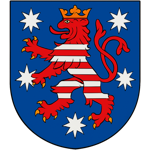
 ⸻  The coat of arms of the Free State of Thuringia consists of a single heraldic shield with a simple classical shape: the shield has a straight horizontal top edge, slightly curved sides that taper inward toward the bottom, and a rounded, pointed base typical of German heraldic shields.  The entire background of the shield is a uniform deep heraldic blue field (azure). This blue color fills the entire shield behind all other elements and contains no gradients, patterns, or textures.  Centered on the shield is a heraldic lion in a rampant posture, meaning the lion stands upright on its left hind leg, with the right hind leg lifted slightly, and both front legs raised forward and upward as if striking. The lion’s body is angled slightly toward the viewer’s left (heraldically to the dexter side of the shield, which appears to the viewer’s left). The lion’s head is turned in the same direction as the body, facing toward the heraldic dexter.  The lion’s entire base color is red (heraldic gules). Over this red base color run eight evenly spaced horizontal silver stripes (heraldic argent). These stripes extend across the entire width of the lion’s torso and limbs, following the shape of the body. The stripes begin near the upper chest and continue down across the abdomen and hindquarters. The pattern alternates red and silver so that the lion appears red with eight silver horizontal bars embedded across its body. The stripes are straight, parallel, and uniform in thickness.  The lion has distinct anatomical features typical of heraldic lions: 	•	The mane is stylized and flame-like, consisting of several curved locks that radiate around the head and neck. 	•	The mouth is open, revealing a visible red tongue. 	•	The tail is long and curves upward and backward, forming a pronounced arc above the lion’s back. 	•	The tip of the tail splits into two stylized tufts in some depictions or ends in a single tuft depending on the heraldic style, but it always curls upward.  The lion wears a golden crown placed on top of its head. The crown is a simple open royal crown with several pointed elements or fleur-like projections. The crown is colored gold (heraldic or) with subtle detailing indicating metal segments.  The lion’s claws and tongue are also colored gold, clearly contrasting with the red body. The claws on both the forepaws and hind paws are clearly visible and slightly elongated.  Surrounding the lion are eight silver stars (argent) placed directly on the blue field. Each star has eight points, meaning the star shape is composed of eight evenly spaced triangular rays radiating from a central point. The stars are flat, geometric, and identical in size.  The eight stars are distributed symmetrically across the shield around the lion: 	•	Three stars are positioned along the upper portion of the shield, above the lion’s head and raised forelegs. 	•	Two stars appear approximately midway along the left and right sides of the shield, roughly at the level of the lion’s torso. 	•	Three stars are positioned in the lower portion of the shield, beneath the lion’s hind legs and tail.  The stars are spaced so that they frame the lion without touching it, creating a balanced composition where the lion occupies the center while the stars evenly fill the surrounding blue space.  The design overall follows the conventions of European heraldry, especially those historically associated with the medieval Ludowingians, rulers of the Landgraviate of Thuringia. The red-and-silver striped lion originates from their heraldic symbol and remained the defining emblem of the region.  The modern arrangement of the lion with the eight silver eight-pointed stars was formally adopted after the re-establishment of the state following the German reunification in 1990, symbolizing the unity of the historical territories that form modern Thuringia within Germany.
a blue flag with a hammer and stars on it
a red white and blue flag with blue stars
Create a simple emoji-style map of North America where Canada and the United States are combined into one country. The entire landmass should be covered in a single American flag design (stars and stripes), with no borders between Canada and the U.S. Make the map all one shape and one color scheme to show unification. No other countries, no separate flags, no text, just the combined landmass fully American.
Here’s a high-impact, clear prompt to generate a viral AI-generated emoji for July 4 (U.S. Independence Day):  ⸻  🎆 Prompt for AI Emoji Generation (July 4 - Viral Style):  “Create a bold, colorful, and emotionally expressive AI emoji that captures the spirit of July 4th (U.S. Independence Day).  The emoji should feature a joyful and patriotic character or symbol — such as a smiling firework, an animated bald eagle in sunglasses, a cheerful Statue of Liberty holding a sparkler, or a star-spangled heart.  Blend red, white, and blue colors with dynamic, celebratory elements like fireworks, waving flags, BBQ food, or parades.  Style should be glossy, modern, and optimized for small screen use — highly sharable on social media and messaging apps. It should evoke feelings of freedom, pride, and fun.  Add subtle motion-like energy (e.g., glow, sparkle, wave) that makes it pop visually even as a static image.  Design it to be instantly recognizable as a July 4 emoji — cute, clever, and meme-worthy.”  ⸻  Would you like versions tailored for: 	•	🇺🇸 Kids and family sharing 	•	🎨 Minimalist aesthetics 	•	🎇 Flashy, meme-driven virality on platforms like TikTok or Instagram?  I can also help generate a set of 3–5 emoji concepts to increase viral potential.
Create a simple, clean emoji-style map of North America where the United States and Canada are merged into one country. The entire landmass should be one solid shape with no borders, fully covered in the American flag (stars and stripes across the entire continent). No text, no faces, no icons — just the landmass itself, clearly showing Canada and the U.S. as one nation under one flag.
Create a simplified emoji that shows the Canadian flag replaced with a single white star. The star should represent Canada becoming part of the United States. The design should be minimal, flat, and emoji-style — no text, no extra icons, just the red Canadian flag with the maple leaf removed and one white star in the center.
Nike shoes Lululemon shirt shorts and jacket north face backpack blue
a man with a beard and blue eyes stares into the camera
a boy with blue eyes stares at the camera
Afro Heritage American Flag, Looks Exactly Like USA flag but green replaces blue, the stars are black, the white stripes are also black
a young girl with blue eyes stares into the distance
Afro Heritage American Flag, Looks Exactly Like USA flag but green replaces blue, the stars are black, the white stripes are also black, the red stripes are still red
"Empowered woman embellished in a flowing gown of blue and white, draped in an ethereal Israel flag as a cape, stands triumphantly on a rocky hilltop, with the sun setting behind. Sparkling stars cascade from the fabric, symbolizing unity and hope.”
Do the Ulster banner of Northern Ireland and make the emoji a flag of it
a map of the united states with flags
Full shot of an American flag, rendered with a textured, intricate design. The flag's design’s constructed of repeating patterns resembling a woven or knitted material, giving a 3-dimensional effect. The stripes of the flag appear as bands of reddish-brown and white, with the white stripes having a textured or lenticular appearance. The blue field containing the stars rendered in a rich, dark blue, and the individual stars made up of smaller, brighter points of light or a sparkling, almost beaded, pattern, giving a glittering appearance. The overall effect’s a stylized, illuminated, and textured American flag.
a knife with a flag of the united states on it
a red and yellow flag with a red star
a pillow with a flag of the state of scotland
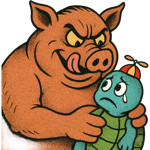
A titan sized fat boar holding a young blue turtle wearing a propeller beanie. The boar is evil and licks his lips as he stares deep into the crying turtle’s eyes
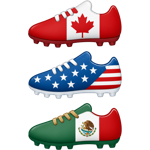
three soccer shoes with the flag of the united states
It combines the flags of Mexico, the United States, and Colombia.
a soccer ball with the flag of the united states of america and mexico in the
colorado state flag but make the edges square and make it look like other flag emojis
السماء صافية، والشمس تميل نحو الغروب بلونها الذهبي الحار، تضرب بهدوء على ميدان العرض في كلية الضباط الجامعية بوزارة الدفاP. The rows are regular, the flags are fluttering, and the voice of the military marsh is knocking on the ground with a majestic tym. Among all the graduates, Mohamed Saleh Mohammed Al-Qarni stands, with his prestige, accuracy, with calm confidence that reflects years of effort, discipline and patience. His military dress is ironed with extreme precision, the new rank shines on his shoulder, the sword hangs on his waist in a strict line, and his shoes shine like a mirror, even the details of his suit say: “I am one of the discipline makers, his walk is not late or a step, his look forward does not turn back.” In his chest the Medal of Academic Excellence, because he was not just a student, he was the first in commitment, careful observation, silent in time of silence, and the initiative of the time of action. On the podium, the voice of the commander's voice announces his full name: Lieutenant Mohammed Saleh Mohammed Al-Qarni... University Officers College - Ministry of Defense. You advance steadily, receive the certificate with one hand, and hit the greeting with the second hand, and your look says: “I have not forgotten a moment of this road, and I have not closed my eyes to any detail.” Behind you in the seats, your father smiles with great pride, and your little brother's hand holds his headband tightly, his eyes shine as he says to his friends: “This is my brother!” And in your heart, the echo of your dream that started from the first rejection, from the first challenge, from the first time they complained about you... And today, you are standing in the place you wish for, but few have Okay, let me describe the official Saudi graduation suit for graduates of the University Officers College in the Ministry of Defense, in accurate detail to help you prepare a design or picture:  ⸻  Official military suit (Saudi uniform for Ministry of Defense officers)  1. Primary Color:  •	 Dark olive green (tends to classic military color).  •	 On some formal occasions, dark black or navy blue may be used, especially in show or graduation clothes.  2. Jacket (military blouse):  •	 Precisely detailed, formal collar (straight and prominent shoulder).  •	 On the shoulder the rank bar (lieutenant in the case of graduation): black or dark green background, and above it one golden star.  •	 Gold buttons engraved with the logo of the two swords and palm.  •	 The armed forces logo is embroidered on the arm (usually the left arm), a circular logo containing two swords, a palm tree, two wings, and a crown.  •	 Symmetrically snocked front pockets.  •	 Light gold embroidery on the edges if the width is formal (sometimes optional depending on the college).  3. Pants (pants):  •	 Same color as jacket, finely detailed, without embroidery.  •	 A straight story that reaches even the military shoe, without wrinkles.  4. Belt:  •	 A wide military gold belt, in the middle with a golden ball with the logo of the Ministry of Defense (swords and palm, surrounded by an olive branch).  •	 The belt passes clearly over the jacket and fastens perfectly.  5. Military hat (official hat):  •	 Known as the “wild” or “official field hat”, the color is the same color as the suit.  •	 In its front center, the armed forces logo is embroidered with a gold thread.  •	 A golden or thick line orbits the front edge.  6. The scarf (sword):  •	 At graduation parties or shows, a decorative sword is added inside a luxurious leather sheath, attached to the left side with a leather strap.  •	 The sword symbolizes pride, strength and discipline, and is a very important symbolic part of the graduation of officers.  7. Shoes:  •	 but KSAFormal military boots black, glossy, slightly high, tied with threads reached it